Persistent nail pain can interfere with your comfort and daily life. At Contact Foot Clinic, we offer expert toenail surgery in Colchester to safely treat chronic or severe nail conditions that haven’t responded to conservative care.
Performed by our experienced podiatrists, nail surgery is a simple, highly effective procedure designed to relieve pain, restore comfort, and prevent the issue from recurring. We follow strict clinical standards set by the Royal College of Podiatry, ensuring every patient receives the highest level of care from consultation through recovery.
Click the tabs below to explore our Toenail Surgery Process:
Toenail surgery is recommended for patients with painful or infected nails that don’t improve with routine ingrown toenail treatment or regular podiatry care.
Common reasons for surgery include:
Before recommending ingrown toenail surgery, your podiatrist will always explore conservative options such as trimming, dressing, or antibiotics if infection is present. Surgery is only advised when it’s the most effective way to restore long-term comfort.
Before your procedure, your podiatrist will carry out a full assessment of the affected toe, checking for swelling, infection, and nail growth pattern. They’ll explain the procedure, answer any questions, and provide pre-operative advice such as:
Your treatment plan will be fully personalised, and you’ll have plenty of time to discuss what to expect during and after the procedure.
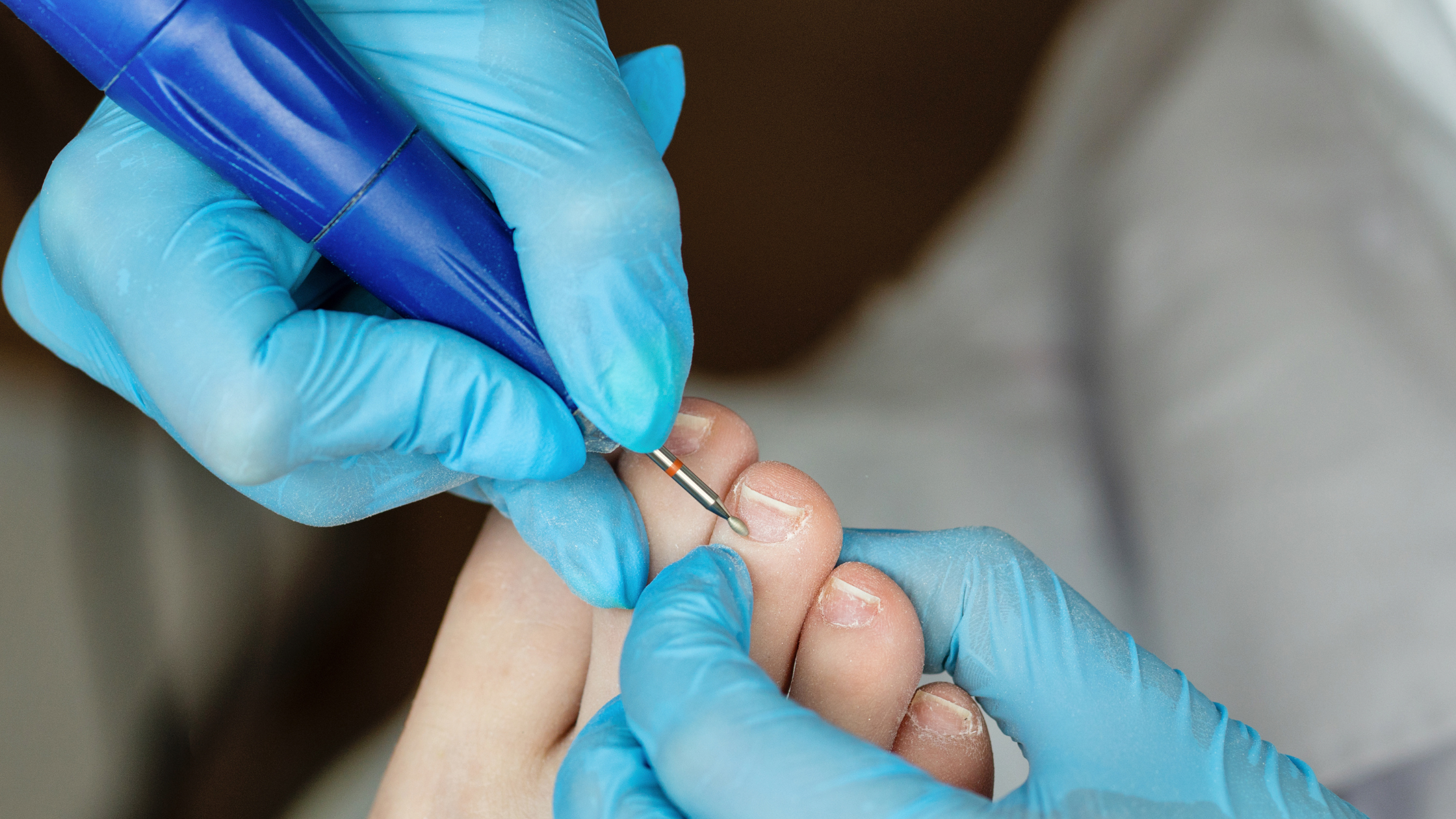
Toenail surgery is a straightforward, in-clinic procedure performed under local anaesthetic, so you’ll remain comfortable and pain-free throughout. Once the area is numb, your podiatrist will carefully remove the nail – either part of the toenail (known as a partial nail avulsion) or, in more severe or chronic cases, the entire nail (total nail avulsion).
If necessary, a mild chemical such as phenol may be applied to prevent regrowth of the problematic edge and prevent ingrown toenails from recurring. The full procedure generally takes 30–45 minutes, and most patients are pleasantly surprised by how quick and comfortable it is.
After surgery, a sterile dressing is applied to protect the area, and your podiatrist will explain how to care for it at home. You’ll be able to walk out of the clinic shortly after your appointment, and most people can return to work within a few days.
At Contact Foot Clinic, every procedure is carried out by experienced, HCPC-registered podiatrists in a calm, supportive environment. All instruments are sterilised to medical-grade standards, following strict hygiene protocols in line with the Royal College of Podiatry.
Following toenail surgery, you’ll receive detailed home care instructions to support safe, effective healing. This includes guidance on cleaning, dressing changes, and signs to look out for during recovery.
Most patients experience:
Follow-up appointments are included to monitor healing and ensure the site remains clean and infection-free. You’ll also receive advice on footwear, moisture control, and how to cut toenails correctly to prevent future problems.
Once your toenail surgery site has healed, most patients experience noticeable and lasting improvements.
You can expect:
By addressing the underlying cause through professional ingrown nail surgery, your chances of future issues are greatly reduced. Many patients tell us they wish they’d had the procedure sooner, as the difference in comfort, mobility, and confidence is often immediate once healing is complete.
All toenail surgery procedures at Contact Foot Clinic are carried out by qualified podiatrists within our Colchester clinic. To book your consultation or discuss your symptoms, get in touch today:
At Contact Foot Clinic, we understand that surgery can feel daunting, but you’ll never go through it alone. From your first consultation to your final follow-up, our friendly podiatrists will guide you through every stage, explaining each step clearly and ensuring you feel reassured, informed, and supported at all times.
Every podiatrist at Contact Foot Clinic is HCPC-registered and a proud member of the Royal College of Podiatry, ensuring that your toenail surgery is performed according to the highest clinical and ethical standards. We stay up to date with the latest podiatric research and best practice guidance, so you can feel confident you’re in expert hands.
Our team has extensive experience performing ingrown nail surgery and minor foot procedures, with an excellent track record of successful outcomes. We combine precise surgical skill with a gentle, patient-centred approach to ensure you feel comfortable throughout your visit.
All procedures take place in our purpose-built, sterile Colchester foot clinic, where we use advanced podiatry equipment and medical-grade sterilisation methods. This ensures your treatment is performed safely, efficiently, and with minimal discomfort.
No two cases are the same. Before your procedure, we take time to assess your symptoms, discuss your goals, and create a treatment plan that’s right for you. Whether you’re seeking relief from a painful ingrown toenail or need a solution for recurring nail infections, we’ll tailor every detail of your care.
After your surgery, we continue to support you through recovery. Our aftercare appointments allow us to monitor your healing, change dressings where needed, and provide expert advice on preventing recurrence - helping you heal comfortably and confidently.
If you’re struggling with ongoing pain, swelling, or infection around your toenail, it’s important not to ignore it. What may start as a minor irritation can quickly become more painful or lead to infection if left untreated. Early intervention from your qualified podiatrist in Colchester can make a huge difference, preventing complications and speeding up your recovery.
Our experienced team can assess your nail, explain your treatment options, and advise whether ingrown toenail treatment or toenail surgery is the most effective solution for you.
No, the procedure is performed under local anaesthetic, so you won’t feel any pain during the surgery itself. You may notice mild soreness or tenderness afterwards as the anaesthetic wears off, but this is usually short-lived and easily managed with standard pain relief. Most patients describe the recovery as far more comfortable than expected, especially once the pressure from the nail has been relieved.
Recovery times vary depending on the individual and the type of procedure carried out. Most people can return to normal daily activity within a few days, provided they keep the toe clean and protected. Full healing usually takes between 4–6 weeks, though it may take slightly longer for more complex cases. Your podiatrist will give you tailored aftercare advice to help the area heal as quickly and comfortably as possible.
If your podiatrist applies a chemical (commonly phenol) to prevent regrowth, the removed section of the nail will not grow back. This helps stop the problem from recurring. In other cases, if only part of the nail is removed without phenol, the nail can regrow naturally. Your toenail surgery plan will always be discussed with you beforehand, so you know exactly what to expect.
Yes. Ingrown nail surgery can still be carried out if there is a mild infection present. In some cases, your podiatrist may recommend antibiotics prior to the procedure to reduce inflammation and ensure optimal healing conditions. Once the problematic section of the nail is removed, infection and pain typically resolve quickly.
Yes, diabetic patients can undergo ingrown toenail treatment or surgery safely, but an initial assessment is essential. Your podiatrist will check circulation, sensation, and healing capacity before proceeding. For ongoing nail and skin management related to diabetes, please visit our dedicated Diabetic Foot Care page for more information and preventative guidance.
Question hasn’t been answered? Contact us today.